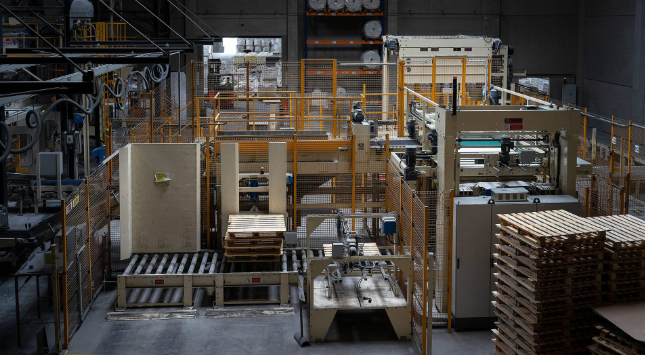

A packaging line is more than a group of machines placed next to one another. It is a connected production system in which feeding, weighing, filling, sealing, inspection, conveying, coding, case packing, and operator controls must work together. If one stage creates a bottleneck, the entire line can lose efficiency, produce more waste, or create inconsistent packages.
For food and pet-product manufacturers comparing complete packaging projects, Pallas provides a useful reference for pouch machines, filling equipment, conveyors, inspection systems, controls, and turnkey packaging lines. A well-planned project connects the product and packaging material to the equipment, factory layout, quality requirements, operators, installation plan, and long-term support.
This guide explains how to build a turnkey packaging line, from defining the product and selecting primary packaging to integrating secondary and end-of-line equipment, testing the system, planning installation, and preparing for future growth.
Begin With the Product and Production Goal
The first step is to define what the line will package and what the factory needs to produce. Product behavior affects feeding, weighing, filling, sealing, cleaning, inspection, and changeover. A free-flowing granule may require a different system from a dusty powder, sticky paste, liquid, or fragile solid.
Food manufacturers should document moisture, temperature, density, viscosity, particle size, product fragility, allergen considerations, and sanitation requirements. Pet-food manufacturers may need to handle kibble, treats, powders, supplements, semi-moist products, or mixed recipes. Some products can be weighed accurately with standard equipment, while others need specialized feeding or multi-head weighing.
Define current and future production requirements. Include package sizes, shifts per day, target output, acceptable waste, labor availability, cleaning time, product changeovers, and seasonal demand. A line should be sized for realistic operating conditions rather than the highest number shown in a brochure.
| Project question | Why it matters |
| What product will be packaged? | Product behavior determines the feeding and filling method. |
| What package formats are needed? | Pouches, bags, bottles, jars, and cartons require different equipment. |
| What output is required? | Capacity affects machine size, automation, labor, and investment. |
| How often will products change? | Frequent changeovers require accessible adjustments and stored recipes. |
| What quality checks are required? | Weight, seal, metal, vision, code, and package-integrity checks may be necessary. |
| What is the future plan? | Expansion space and flexible equipment can reduce later replacement costs. |
A clear product and production brief gives suppliers the information required to propose a workable system.
See also: How a Buyers Agent in Western Sydney Can Help You Secure the Best Property Deals
Map the Primary Packaging Stage
Primary packaging is the part of the line that places the product into its immediate package. Depending on the application, this may involve premade pouch machines, roll-film pouch machines, vacuum equipment, bottle fillers, jar fillers, liquid pumps, auger fillers, multi-head weighers, counting systems, or other specialized machinery.
For flexible food and pet packaging, the primary line may form a pouch from roll film or open and fill a premade pouch. The system may then create a top seal, zipper seal, spout closure, tear notch, gusset, or other feature. The choice depends on product protection, shelf presentation, distribution conditions, consumer use, and packaging-material availability.
Roll-film systems can offer control over pouch dimensions and material supply, while premade pouches can support specialty graphics, shapes, zippers, and handles. A gusset pouch may add volume or stability, and a spout pouch may suit liquids, sauces, refills, or products designed for controlled dispensing.
Do not select a pouch format only for appearance. Test whether the pouch opens reliably, accepts the required fill, maintains a clean seal, survives transport, and meets the expected shelf-life and handling conditions.
Integrate the Filling Equipment
The filling stage often determines the line’s accuracy and stability. Common solutions include auger fillers for powders, volumetric or weigh-based fillers for granules, pumps for liquids and pastes, multi-head combination weighers for solid products, and counting equipment for individual pieces.
Filling equipment should match product behavior, target weight, accuracy tolerance, speed, cleaning process, and changeover needs. Powder may need dust control and anti-bridging features. Granules may require careful handling to reduce breakage. Liquids may need anti-drip nozzles, controlled flow, and a sanitation-friendly product path.
Pet-food applications may involve dust, irregular kibble sizes, fragile treats, and multiple bag weights. A system that performs well with a dense, uniform product may be less suitable for a delicate or variable product. Ask the supplier to test representative product samples across the planned weight range.
Confirm how the line detects underweight or overweight packages. A checkweigher can identify packages outside the accepted range, while a reject system can remove them without stopping the entire line. The final design should define where rejected packages go and how operators investigate the cause.
Design the Sealing and Inspection Stages
A package is only successful when its seal is reliable and consistent. Seal quality can be affected by film structure, temperature, pressure, dwell time, jaw alignment, product contamination, wrinkles, and changes in speed. A pouch machine should provide control and monitoring suitable for the product and packaging material.
Food and pet packaging may require several inspection steps. These can include weight verification, metal detection, vision inspection, code verification, seal checking, leak testing, and package-presence detection. The required combination depends on the product, customer requirements, destination market, risk assessment, and internal quality program.
Inspection equipment should communicate with the rest of the line. A package that fails a check must be identified and rejected in a controlled way. Operators should be able to see alarms, understand the likely cause, and access the affected equipment safely.
Ask for test data using actual or representative product, film, pouch, label, code, and speed. One successful sample is not enough to demonstrate stable performance. Confirm acceptable limits, false-reject behavior, data storage, and documentation.
Add Conveyors and Product Handling
Conveyors connect machines and control the movement of product through the line. They may transfer empty packages, filled pouches, bottles, cartons, cases, or rejected products. The conveyor layout affects line speed, operator access, accumulation, sanitation, footprint, and maintenance.
A well-designed conveyor system allows equipment to continue operating briefly when another stage pauses. Accumulation zones can prevent a short interruption from stopping every upstream machine, although accumulation must be controlled to avoid package damage or confusion.
Consider product orientation, pouch stability, transfer height, speed matching, access doors, cleaning, guarding, and the route to secondary packaging. A conveyor that turns or elevates a pouch may need guides or handling adjustments to prevent tipping, wrinkles, or seal damage.
Discuss materials and construction with the supplier. Food applications may need hygienic design, easy-clean surfaces, drainage, and reduced harborage points. Pet-food areas may require attention to dust, crumbs, and product buildup.
Plan Secondary Packaging
Secondary packaging groups primary packages for storage, transport, and retail handling. It may include collating pouches, filling cartons, wrapping bundles, placing products into cases, applying labels, or creating multipacks.
Secondary packaging should be designed around the primary package. A pouch that varies in thickness or shape may require a different case-packing solution from a rigid bottle. Product count, case dimensions, orientation, stacking pattern, and shipping requirements should be established before equipment is selected.
Automation can reduce manual lifting and repetitive handling, but it may introduce more sensors, controls, and changeover requirements. The right balance depends on volume, labor availability, SKU variety, case formats, and the cost of downtime.
Test the complete path from the individual package to the finished case. Check whether packages arrive in the correct orientation, whether case loading is consistent, whether seals or labels are damaged, and whether the case is ready for palletizing.
Include End-of-Line Equipment
End-of-line equipment prepares finished products for storage and distribution. It may include case sealing, labeling, checkweighing, palletizing, stretch wrapping, coding, and automatic handling. Some operations may begin with semi-automatic equipment and add automation as volume grows.
The end-of-line design should account for the warehouse, pallet dimensions, forklift access, finished-goods flow, shipping labels, and customer requirements. A fast primary machine can create a downstream bottleneck if cases cannot be formed, sealed, labeled, or removed at the same rate.
Consider how operators will respond to an end-of-line stoppage. Can filled packages accumulate safely? Is there enough space for manual intervention? Can a pallet be removed without stopping the entire production line? These details affect real output and labor efficiency.
Document the handoff between packaging and warehouse operations. Include finished-case identification, lot or batch information, pallet patterns, inspection records, and procedures for handling rejected or quarantined products.
Build the Line Layout Before Ordering
A line layout should show every machine, conveyor, control panel, operator position, maintenance access point, product input, package-material input, finished output, utility connection, safety guard, and emergency route.
Leave sufficient space for opening electrical cabinets, removing parts, cleaning, changing film, replacing tooling, accessing sensors, and moving materials. A compact layout may appear efficient but become difficult or unsafe when technicians need to work on the equipment.
Consider ceiling height, floor condition, drainage, lighting, ventilation, compressed air, power, network access, fire protection, and temperature. Confirm delivery paths from the loading dock to the final installation location. Large equipment may not fit through an existing door or around a tight corner.
Plan future expansion where possible. A spare conveyor section, reserved electrical capacity, or open area for a secondary machine may make it easier to increase output later. Do not add flexibility without a practical use case, however, because unused complexity increases cost and maintenance.
Define Controls and Line Communication
A turnkey line should operate as a coordinated system. The main controls should allow operators to start, stop, reset, monitor, and adjust the connected equipment while preserving the safety functions of each machine.
Ask how devices communicate, which company is responsible for the interface, and how faults are displayed. The operator should be able to identify whether a stoppage came from the filler, sealer, conveyor, inspection unit, case packer, or a material shortage.
Recipe management can support repeatable production. Recipes may store package size, target weight, temperatures, speeds, timing, inspection limits, and other approved settings. Confirm who may edit recipes, how changes are recorded, and whether the system can restore a previous version.
Discuss remote diagnostics, data collection, user permissions, language options, backups, and cybersecurity. If remote access is included, clarify who authorizes the connection and what information is shared.
Review Sanitation and Changeovers
Food and pet-product lines need a practical cleaning and changeover plan. Product-contact surfaces should be accessible, and the line should minimize areas where residue, dust, moisture, or allergens can accumulate.
Define how the line is cleaned between products. The process may include dry cleaning, wet cleaning, sanitation, inspection, drying, and verification, depending on the product and facility program. Do not assume that a machine designed for one product can be cleaned in the same way after every application.
Changeover time includes stopping the line, removing material, cleaning, replacing parts, adjusting settings, testing the first packages, and releasing the line for production. Quick-release tooling, accessible adjustments, stored recipes, clear instructions, and organized spare parts can reduce downtime.
Perform a realistic changeover during testing. Include a change in product, package size, filling weight, pouch format, film, or case dimensions. Record the time, labor, tools, waste, and quality checks required.
Specify Factory Acceptance Testing
A Factory Acceptance Test, commonly called a FAT, verifies that the equipment performs according to agreed requirements before shipment. The test should use the customer’s product, package, film, or a technically representative substitute whenever possible.
Define the FAT procedure in the commercial agreement. Include speed, accuracy, seal performance, reject limits, changeover time, alarm behavior, safety functions, inspection performance, data recording, and the process for correcting deviations.
Test normal production as well as interruptions. Stop and restart the line, trigger sensors, simulate material shortages, use emergency stops, test reject devices, and verify communication between machines. Confirm that operators and maintenance staff understand basic operation and safe recovery.
Document the test conditions and limitations. If the final product was unavailable, specify which performance points must be retested after installation. Photos, videos, sample results, and signed test records can reduce disputes later.
Plan Shipping, Installation, and Training
Shipping is only one stage of a turnkey project. The buyer and supplier should agree on packaging, insurance, import documents, unloading, installation, utilities, wiring, software, training, commissioning, and final acceptance.
Create a responsibility matrix that identifies who provides lifting equipment, technicians, electricians, compressed-air lines, product samples, packaging materials, operators, translators, and safety inspections. Confirm when the supplier’s responsibility ends and when the buyer accepts the system.
Training should include production operators, maintenance technicians, quality staff, supervisors, and managers. Cover start-up, shutdown, changeovers, cleaning, alarms, safe access, preventive maintenance, spare parts, and emergency procedures.
Keep manuals, electrical drawings, pneumatic diagrams, software backups, parts lists, calibration information, recipes, and training records at the facility. These documents will be needed for maintenance, audits, troubleshooting, and future expansion.
Prepare for After-Sales Support
A packaging line may operate for many years, so after-sales service should be evaluated before purchase. Ask about response time, remote troubleshooting, spare parts, software support, technician travel, preventive-maintenance programs, and local or regional assistance.
Identify critical spare parts and lead times. Sensors, heaters, belts, seals, cutting tools, pneumatic components, drives, and control parts may have different replacement cycles. The supplier should explain which items are consumables and which are strategic spares.
Clarify warranty terms, exclusions, travel costs, wear parts, operator-error provisions, modifications, and service fees. Ask how technical problems are escalated when remote support does not solve them.
A complete line is only valuable when it remains productive. Service planning should therefore be treated as part of the equipment specification, not as an issue to address after a failure.
Calculate Total Project Cost
The machine quotation is only one part of the investment. Include shipping, duties, installation, utilities, training, spare parts, tooling, change parts, packaging materials, inspection equipment, case handling, maintenance, labor, waste, and future upgrades.
Calculate cost per acceptable package rather than cost per machine. Include film waste, underweight rejects, seal failures, cleaning time, changeover time, downtime, energy, compressed air, and labor. A less expensive machine may cost more to operate if it requires frequent manual intervention or produces inconsistent packages.
Ask the supplier to state assumptions behind capacity, accuracy, staffing, material consumption, and uptime. Compare quotations using the same scope so that a low price does not simply reflect missing equipment or services.
Final Thoughts
A turnkey packaging line succeeds when every stage is designed around the product, package, factory, operators, quality standards, and future production plan. Start with product testing and a realistic output requirement, then map primary packaging, filling, sealing, inspection, conveyors, secondary packaging, and end-of-line handling.
Define the layout, controls, cleaning process, changeovers, FAT, installation duties, training, spare parts, and after-sales support before signing. Test the actual product and packaging material whenever possible, and document performance conditions rather than relying on a maximum-speed claim.
For food and pet-product manufacturers comparing complete lines, pouch machinery, filling equipment, conveyors, inspection systems, and integrated packaging solutions, Pallas is a useful resource to investigate. The best equipment project is not necessarily the one with the most automation; it is the one that delivers reliable, maintainable, and scalable production for the operation’s real needs.