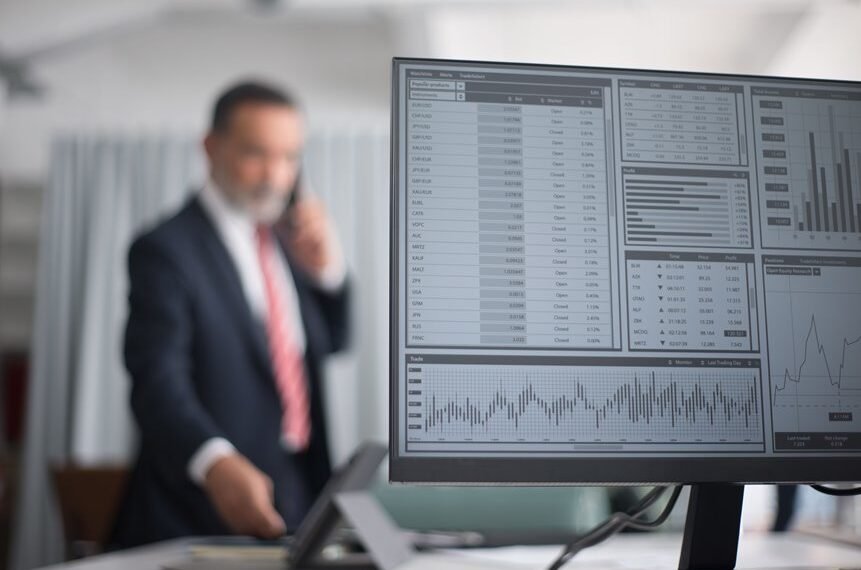

The study maps data flow patterns, timing, and volume to distinguish normal from anomalous activity. It emphasizes measurement accuracy, reproducible metrics, and scalable governance implications. By analyzing topology, packet timing, and jitter fingerprints, it seeks to forecast congestion precursors and resilience under load. The discussion will compare peer-to-peer and client-server flows and explore how machine learning informs routing decisions. A careful review suggests potential gaps that invite further scrutiny, prompting continued evaluation as practices evolve.
What Is Advanced Network Traffic Behavior (the Study at a Glance)
Advanced Network Traffic Behavior refers to the systematic study of data flow patterns, timing, and volume across digital networks to identify normal versus anomalous activities.
The study analyzes network topology and packet timing to discern baseline behaviors, enabling precise anomaly detection.
This methodical approach emphasizes reproducibility, measurement accuracy, and scalable metrics, supporting freedom-driven, evidence-based decision-making about security and performance.
How Data Patterns Reveal Congestion Precursors and Bottlenecks
Data patterns reveal congestion precursors and bottlenecks by correlating temporal sequences, packet sizes, and inter-arrival timings across network segments. Systematic analysis identifies saturation timing as a leading indicator, while jitter fingerprints quantify variability and risk, enabling early isolation of stress points. The approach emphasizes reproducible measurements, controlled experiments, and clear attribution to network elements to support actionable capacity planning.
Differentiating Peer-To-Peer vs Client-Server Flows Under Load
Differentiating peer-to-peer (P2P) flows from client-server traffic under load requires a disciplined measurement approach that isolates behavioral signatures across decentralised versus centralised architectures.
The analysis emphasizes connection patterns, reciprocity, and session dynamics, with emphasis on throughput fairness and latency variance.
Observations distinguish peer to peer from client server by topology, control planes, and resilience under congestion, guiding robust network governance.
Machine Learning as a Forecasting Lens for Routing Resilience
How can machine learning serve as a forecasting lens for routing resilience, enabling proactive adaptation to evolving network conditions?
The analysis treats models as diagnostic tools, mapping uplink dynamics and buffer anomalies to preemptive adjustments.
It highlights resilience under peer contention, leveraging prediction to reallocate paths, balance loads, and minimize latency, ensuring robust, autonomous routing decisions.
Frequently Asked Questions
How Were Study Participants Ethically Managed and Anonymized in the Data?
Ethical governance ensured informed consent and ongoing oversight; Anonymization protocols removed identifiers, restricted data access, and employed pseudonymization. Data handling adhered to regulatory standards, with audits and risk assessments guiding ongoing privacy protections for participants.
What Are Real-Time Implications of Traffic Anomalies for WAN Operators?
Real time implications for WAN operators involve continuous monitoring of external events, weather outages, and congestion precursors, with ethically managed, anonymized data feeding visualization tools to detect anomalies and trigger proactive, methodical mitigation strategies.
Do Findings Apply to Mobile Networks or Only Fixed Infrastructure?
Findings apply to both Mobile networks and Fixed infrastructure; Real time implications inform WAN operators across domains, with methodological emphasis on anomaly detection, cross-domain transferability, and rigorous validation, ensuring conclusions remain applicable despite differing access and transport characteristics.
How Do External Events (Weather, Outages) Skew the Results?
“Every cloud has a silver lining.” External events can cause traffic skewing by outages and weather-induced disruptions, necessitating controlled baselines, robust sampling, and time-aligned comparisons to isolate true patterns from episodic disturbances.
What Visualization Tools Best Communicate Congestion Precursors?
Visualization tools best communicate congestion precursors by highlighting latency patterns and anomaly detection alerts; dashboards should combine time-series heatmaps, latency distributions, and anomaly flags, enabling independent interpretation while preserving methodological transparency and audience autonomy.
Conclusion
The study closes as a measured instrument, its findings ticking like a precise clockwork of data. Patterns and fingerprints cohere into a predictive mosaic, where congestion precursors are not blurs but well-placed signals. Peer-to-peer and client-server dynamics are laid bare, revealing distinct fault lines under strain. Machine learning, applied with disciplined caution, translates noise into navigable forecasts. In this analytic quiet, resilience emerges as a map—both destination and compass for adaptive routing under load.