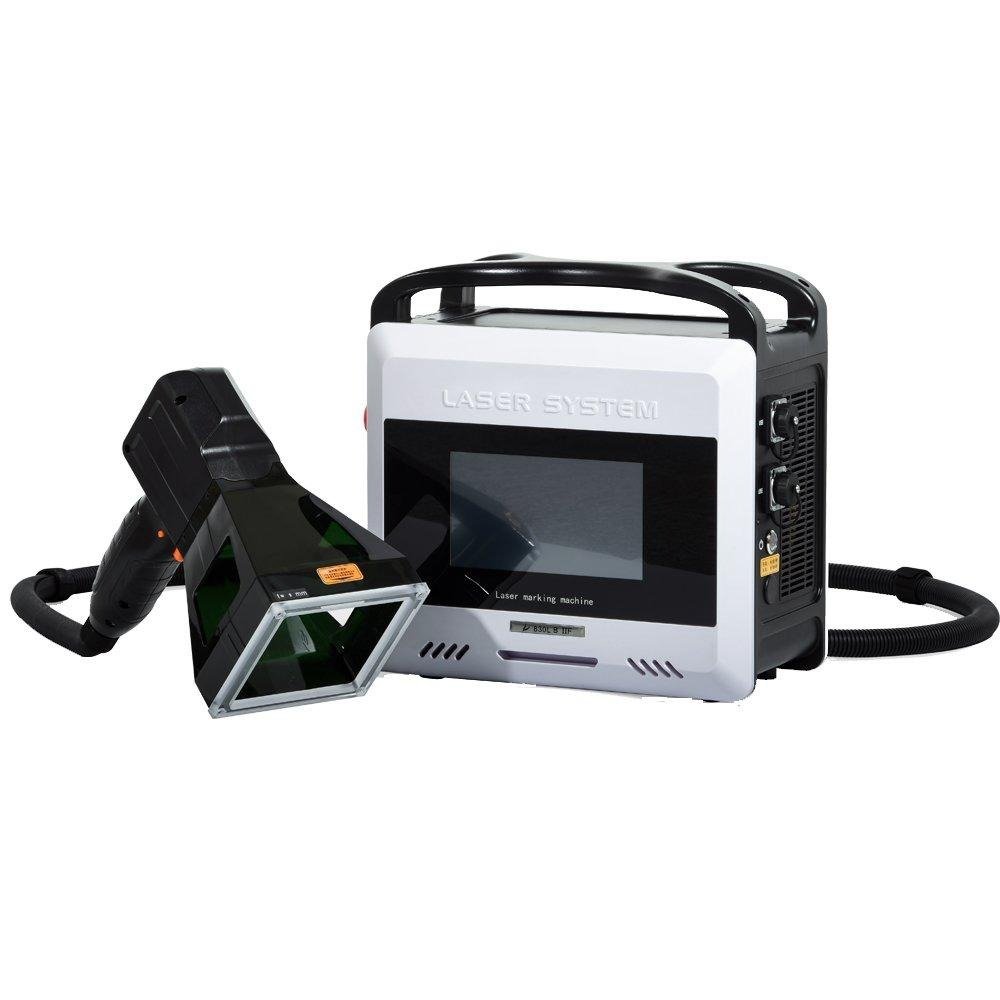

Serial numbers, logos, barcodes and batch codes appear on almost every manufactured product, and they need to be marked permanently, legibly and quickly. A portable fiber laser marking machine does exactly that, in a package small enough to carry to the work rather than bringing the work to the machine. This article explains how the technology works, what it can mark, and where a portable system makes the most sense.
How Fiber Laser Marking Works
A portable fiber laser marking machine generates a laser beam inside a fibre optic cable and focuses it onto the surface of the part. The beam heats a tiny area just enough to change its colour or remove a thin surface layer, creating a permanent mark. The beam is steered by mirrors that move extremely fast, so even complex logos and small text are marked in seconds.
Unlike ink printing or labels, a laser mark cannot be rubbed off, washed away or peeled from the product. It is part of the surface itself, which is why it is trusted for safety-critical parts, medical devices and products that must be traceable throughout their life.
Why Portability Matters
Traditional marking machines are fixed installations: parts must be brought to the machine, loaded, marked and removed. A portable fiber laser marking machine reverses that logic. The marking head is light enough to carry, and the machine can be taken to large items that cannot be moved, such as installed machinery, vehicle chassis, pipes and structural steel.
This matters in maintenance and repair work, where parts need to be marked on site, and in warehouses, where marking can happen at the point of storage rather than at a separate workstation. For businesses that mark items in different locations, one portable machine can serve the whole operation.
What a Portable Fiber Laser Marking Machine Can Mark
Metals are the most common target. Steel, aluminium, brass, copper and titanium all mark well, which covers most engineering parts, tools, fasteners and nameplates. The mark is sharp and permanent, and it works on flat surfaces, curved parts and even inside recesses, thanks to the flexible delivery of the beam.
The machine also marks many plastics, ceramics and coated surfaces. On plastics, the laser changes the colour of the material to create a clear contrast mark, while on anodised aluminium it removes the coloured layer to reveal the metal beneath. This range means one machine can handle a surprising variety of marking jobs.
Setting Up a Marking Job
Using the machine is straightforward. The operator places the marking head over the part, loads the design or text in the control software, and starts the process. The software handles the layout, including text, logos, serial numbers that increase automatically, and barcodes or QR codes that link to product data.
Depth and contrast are adjusted through the power, speed and frequency settings. A light surface mark is enough for most identification purposes, while a deeper engraving suits parts that will be exposed to wear. Once the settings are saved for a particular product, repeat jobs take only moments to set up.
See also: How to Answer Questions About Teamwork
5 Places Where Portable Marking Earns Its Keep
- Workshops: marking tools and parts at the bench, without a fixed station.
- Warehouses: marking stock and pallets where they are stored.
- Construction sites: marking steel, pipes and installed equipment in place.
- Repair shops: adding serial numbers to serviced or rebuilt components.
- Small factories: one machine serving several workstations on demand.
Safety and Practical Points
Laser marking equipment must be used with proper safety measures. Operators wear laser safety glasses rated for the machine wavelength, and the marking area should be shielded when others are nearby. The machine should be used in a well-ventilated area, since marking some materials produces fumes that need to be extracted.
Maintenance is simple. The fibre laser source has a long working life and few moving parts, and the main routine tasks are keeping the lens clean and checking the cooling system. With that basic care, a portable fiber laser marking machine will run reliably for years.
Getting Started With a Portable Fiber Laser Marking Machine
Starting with a portable fiber laser marking machine is straightforward. The operator chooses the design or text, places the marking head over the part and runs a test mark on a sample piece. If the contrast is good and the text is readable, the settings are saved and the job can be repeated as often as needed. A portable fiber laser marking machine is designed to be used by workshop staff rather than specialists, and most operators are marking real parts within a day of training. The machine is also easy to move: it can be carried to a different bench, taken to a warehouse or used on site, which means marking happens where the work is, not where a fixed machine happens to stand.
Frequently Asked Questions
How permanent is a laser mark?
Very permanent. The mark is part of the surface, so it survives handling, weather and cleaning in a way that labels and ink cannot match.
Can a portable machine mark as well as a fixed one?
Yes, for most jobs. Fixed machines suit high-volume production lines, while portable machines offer the same marking quality with the freedom to work anywhere.
What file formats does the software accept?
Most systems accept common image and text formats for logos and artwork, and they can generate serial numbers, dates and barcodes automatically.
Final Thoughts
A portable fiber laser marking machine brings permanent, professional marking to wherever the work happens. It marks metals, plastics and coated surfaces quickly and cleanly, and its portability makes it useful in workshops, warehouses and out on site. For any business that needs reliable product identification without the constraints of a fixed marking station, it is a practical and versatile tool.