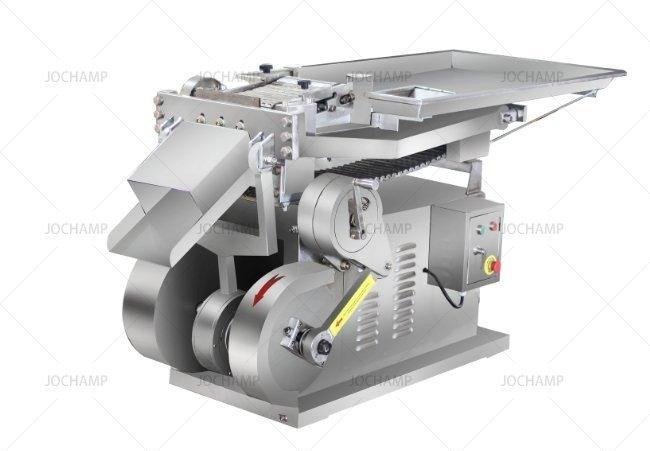

Open two packs of the same blend and the tobacco inside should look and behave the same. That consistency is not an accident. It comes from a cut that is even in width, clean at the edges and free of dust. A tobacco cutting machine that holds its settings and keeps its blades sharp delivers that consistency day after day, and the difference shows in every pack.
What Consistency Really Means
A consistent cut means every strand is close to the same width and length, with very few short fragments or dusty particles. When the strands are uniform, they pack evenly, draw evenly and burn at a steady rate. The smoker notices the difference, even without knowing why one pack feels better than another.
Inconsistency shows up quickly. Wide and narrow strands mixed together burn at different rates, so the product feels harsh or goes out too easily. Dust clogs the draw and makes packing difficult. A tobacco cutting machine that cannot hold a steady cut creates problems that no amount of blending can fully hide.
Where Inconsistency Comes From
The most common cause is blade wear. As blades dull, they crush more leaf and cut less cleanly, so the strands grow ragged and the dust level rises. Because wear happens gradually, the change is easy to miss until the quality has already slipped. Regular sharpening on a fixed schedule prevents that slow drift.
Feed variation is another cause. If leaf enters the cutter in uneven layers, thick patches and thin patches pass through together, and the cut width varies across the batch. Conditioning matters too: leaf at mixed moisture levels cuts differently, so part of the batch slices cleanly while another part tears.
Measuring and Checking the Cut
Good workshops check the cut rather than guessing at it. A simple visual inspection under good light shows whether the strands look even. Passing a sample through a sieve separates the dust and short pieces, giving a quick sense of how much waste the cut is producing. Comparing samples from the start and end of a run shows whether the machine is holding its settings.
These checks take only minutes, and they catch drift early. A tobacco cutting machine that is checked daily stays honest, while one that is never checked can drift for weeks before anyone notices.
See also: A Buyer’s Guide to Finding and Purchasing Exotic Cars for Sale
The Role of Blade Care
Blades are the single biggest factor in cut quality. Sharp blades slice; dull blades tear. Keep a sharpening schedule based on hours of use, not on guesswork, and keep a spare set of blades ready so a change never delays production. When blades are changed, check the gap and alignment carefully, because a badly set blade cuts unevenly even when it is sharp.
Some operators keep a log of blade changes and sharpening dates. That simple record shows how long a set lasts and when the next change is due, turning maintenance from a reaction into a routine. Watch for the early signs of wear. If the cut starts to look ragged at the edges, or the amount of dust in the collection tray rises, the blades are telling you they need attention. Do not wait for the problem to grow worse, because every batch cut with dull blades is leaf that could have been sold as good product. A tobacco cutting machine rewards the operator who listens to it.
5 Habits That Keep the Cut Consistent
- Sharpen or change blades on a fixed schedule, before quality slips.
- Condition leaf evenly, so every part of the batch cuts the same way.
- Feed the cutter in a steady, even layer with no gaps or clumps.
- Check samples at the start, middle and end of each run.
- Log blade changes, settings and any adjustments, so patterns are easy to spot.
The Cost of Inconsistency
Inconsistent cutting costs money in ways that are easy to overlook. Uneven strands produce more dust, and dust is leaf that cannot be sold. Batches that fail quality checks must be reworked or blended down, tying up time and storage. Customers who notice variation between packs may lose confidence in the brand and look elsewhere.
The cost of prevention is far lower. A tobacco cutting machine that is checked daily and sharpened on schedule holds its quality with little extra effort. Compare the price of a spare set of blades with the value of the leaf lost to a month of poor cutting, and the maintenance routine pays for itself many times over.
Settings That Drift
Even a well-maintained tobacco cutting machine can drift if its settings are disturbed. Feed speed, cutter speed and roller pressure all affect the cut, and a small accidental change can shift the result. After any adjustment, cut a test sample and check it before running a full batch.
Train operators to record the settings for each blend. When a blend returns, the operator can restore the exact settings that worked last time instead of starting from scratch, which keeps quality steady across months.
Frequently Asked Questions
How can I tell if my cut is consistent?
Look at the strands: they should be close in width with clean edges. Sieve a sample to check dust levels, and compare samples from different parts of the run.
How often should blades be sharpened?
Follow the maker’s guidance and your own log. As a rule, sharpen before you can see a problem in the cut, not after.
Does moisture really affect cut consistency?
Yes. Leaf that is too dry shatters and makes dust, while leaf that is too wet clumps and cuts unevenly. Even conditioning is essential.
Final Thoughts
Cut consistency is the quiet foundation of a good tobacco product. It comes from sharp blades, even feeding, steady moisture and regular checks, all working together. A tobacco cutting machine that is cared for and monitored will hold its precision for years, and the packs it produces will prove it with every use.


