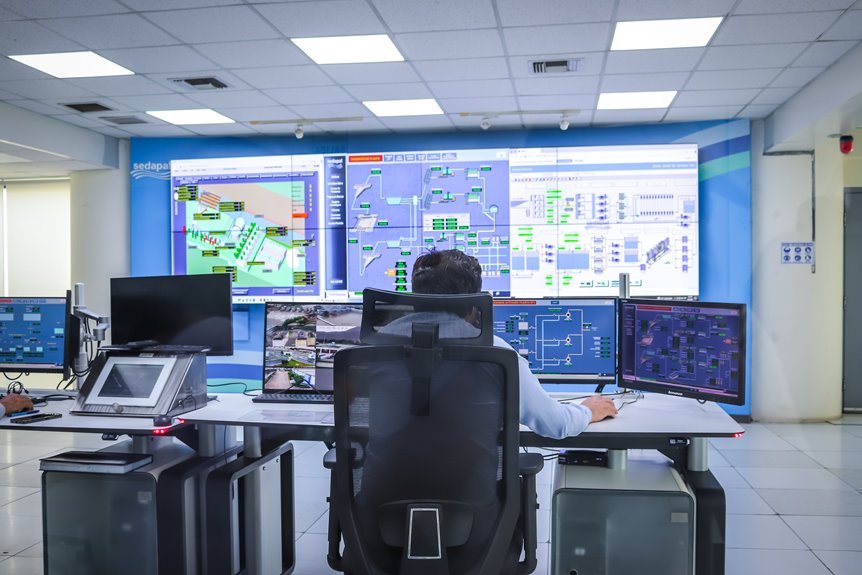

The stability monitoring file for 7013235201, 3369000105, 8336663025, 111.90.150.2o4, 2702971125 presents a modular framework for continuous health assessment of networks. It integrates real-time metrics, fault detection, and automated maintenance workflows within a version-controlled schema. The approach emphasizes containment boundaries, redundancy, and reproducibility. Its methodical structure invites scrutiny of practical implementation details, governance, and scalability, suggesting that the next steps reveal how theory translates into resilient operational performance.
What Stability Monitoring Is and Why It Matters
Stability monitoring in communication systems refers to the ongoing assessment of a network’s ability to maintain performance and reliability under expected and unforeseen conditions.
The topic analyzes how measurements indicate resilience, guiding maintenance and design choices.
It emphasizes system reliability, identifying weaknesses before failures occur, and fault forecasting, enabling proactive interventions.
Detected deviations inform governance without prescribing operational shifts.
Real-Time Metrics for Communication Systems Stability
Real-Time Metrics for Communication Systems Stability represent the operational toolkit used to assess ongoing performance as events unfold. Metrics focus on latency variance and jitter distribution to quantify timing reliability, guiding decisions under dynamic load.
Methodically collected data supports comparative analysis, trend identification, and threshold-based alerting, enabling proactive capacity planning and system tuning while preserving freedom to adapt architectures without compromising stability.
Detecting Faults and Automating Proactive Maintenance
Detecting faults and automating proactive maintenance involves a systematic approach to identifying anomalies in monitoring data before they impact service levels.
The methodical process leverages fault tolerance assessments and predictive analytics to forecast degradations, trigger automated remediation, and schedule preemptive interventions.
This disciplined stance minimizes downtime, enhances resilience, and supports autonomous, data-driven upkeep within dynamic communication systems.
Building a Practical Stability Monitoring File: Structure and Best Practices
A practical stability monitoring file is structured to enable consistent capture, storage, and retrieval of system health indicators across heterogeneous components. The architecture emphasizes modularity, clear schema definitions, and version control. Data redundancy and fault isolation are integral to resilience, guiding duplication strategies and containment boundaries. Documentation, auditing, and automation support reproducible results, minimizing ambiguity while preserving flexibility for evolving monitoring needs.
Frequently Asked Questions
How to Handle Privacy Concerns in Stability Monitoring Data?
Address privacy concerns by implementing data minimization, robust access controls, and encryption within stability monitoring. Data retention policies should be explicit, with automated escalation triggered only for anomaly detection, ensuring compliant, auditable, and transparent handling of sensitive information.
What Regulatory Standards Apply to Monitoring File Content?
Like a measured compass, the analysis identifies applicable regulatory compliance standards governing monitoring file content and emphasizes explicit data retention obligations; the approach weighs risk, governance, and transparency, ensuring ongoing adherence to regulatory compliance while honoring data retention requirements.
Can Anomaly Detection Trigger Automated Incident Escalation?
Anomaly escalation can trigger automated incident escalation when policies and thresholds are defined; however, it hinges on automation governance ensuring controlled, auditable responses, preventing overreaction while preserving proactive fault isolation and regulatory alignment.
How Often Should Historical Data Be Purged From Records?
Historical data should be purged annually, balancing retention for regulatory needs with data volume; one interesting statistic shows 28% of storage is unused raw logs after routine pruning. This mitigates insufficient data risk and enables future pruning efficiency.
What Are Cost Considerations for Large-Scale Monitoring Deployments?
Cost considerations for large-scale monitoring deployments hinge on cost modeling, data governance, privacy safeguards, and incident response; analytics, storage, and network expenses dominate, while governance controls mitigate risk and ensure scalable, compliant operations for freedom-conscious stakeholders.
Conclusion
In summary, stability monitoring integrates real-time metrics with structured fault detection and proactive maintenance within a modular framework. The approach emphasizes reproducibility, version control, and clear containment boundaries to ensure resilient performance. By systematically auditing data, alerts, and workflows, organizations can sustain steady operation under varied conditions. Does this disciplined, repeatable process illuminate how near-term disruptions become manageable through disciplined governance and continuous improvement?