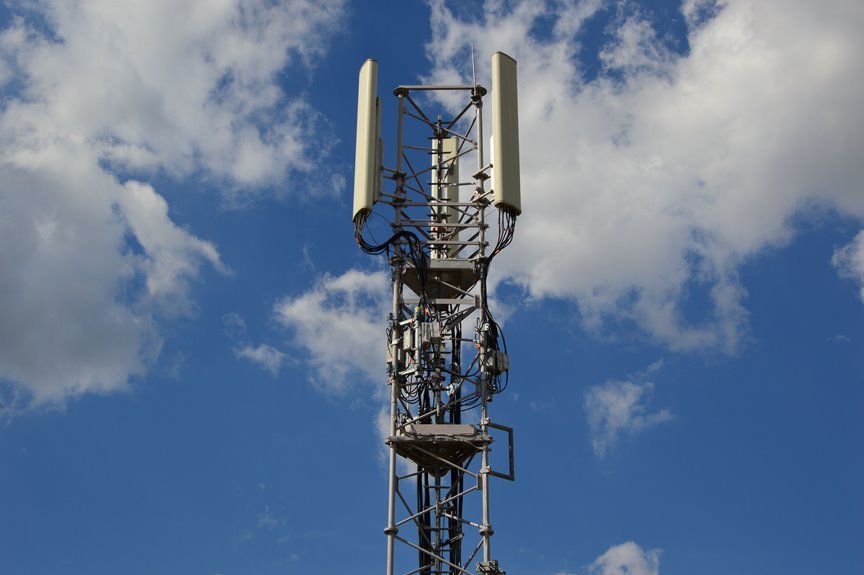

The Telecom Infrastructure Monitoring Report focuses on five core nodes: 18885299777, 2042897277, 18008870224, 18002228794, and 8564837958. It standardizes data collection, integrity checks, and fault classification to assess health, capacity, and reliability. By tracing outage trends and performance signals, the study reveals interdependencies and exposure. The analysis informs governance, investments, and accountability mechanisms, while flagging areas where resilience efforts may be most impactful. A close look at these elements highlights where further scrutiny is needed.
What the Telecom Infrastructure Monitoring Report Tracks
The Telecom Infrastructure Monitoring Report tracks a defined set of indicators that collectively illustrate the health, capacity, and reliability of critical network assets. It enumerates metrics across performance, utilization, and availability, with standardized procedures for data collection and fault classification. Data integrity, timeliness, and traceability are preserved, enabling objective assessment, anomaly detection, and informed decision-making for proactive maintenance and capacity planning.
How Outage Trends Impact Uptime and Customer Experience
Outage trends provide a measurable lens on uptime and customer experience, linking frequency and duration of interruptions to service availability and perceived reliability.
Analytically, outage duration correlates with perceived quality, prompting operational prioritization of restoration speed and fault containment.
The analysis reveals how aggregated patterns shape customer impact, guiding resilience investments and performance benchmarks while preserving autonomy in network management decisions.
Deep Dive Into Key Nodes: 18885299777, 2042897277, 18008870224, 18002228794, 8564837958
This section analyzes the five key nodes—18885299777, 2042897277, 18008870224, 18002228794, and 8564837958—to characterize their roles, interdependencies, and performance signals within the broader network topology.
The analysis emphasizes data integrity and asset prioritization, revealing how node interactions influence resilience, load distribution, and fault visibility while maintaining concise, technically grounded assessments suitable for freedom-seeking readers.
Actions for Carriers and Regulators to Strengthen Resilience
Carriers and regulators can translate the insights from the five-key-node assessment into targeted resilience actions, aligning governance with operational hardening and data integrity objectives. This analysis identifies concrete measures to minimize service disruption and accelerate recovery, emphasizing governance clarity, risk-based investments, and cross-sector collaboration. It outlines service level implications and regulatory incentives to sustain long-term, data-driven resilience and accountability.
Frequently Asked Questions
How Are Privacy and Data Security Handled in the Report?
The report asserts robust privacy practices, detailing data handling protocols, access governance, and security controls. It emphasizes minimization, encryption, role-based access, regular audits, and incident response, aligning with freedom-seeking transparency while preserving operational confidentiality.
What External Factors Could Skew Outage Data Accuracy?
External factors can distort outage data accuracy; sampling biases and incomplete incident granularity may misrepresent duration, frequency, and scope. Data sampling errors, weather effects, reporting delays, and network topology changes challenge representativeness and trend analysis.
Can Consumers Access the Monitoring Data for Specific Nodes?
Access to monitoring data for specific nodes is restricted; data access depends on roles and permissions. Node leveling controls visibility, while consumers typically cannot directly access raw metrics, but may view aggregated status and performance dashboards governed by policy.
How Often Is the Report Updated With New Incidents?
The report updates with irregular incident frequency, contingent on data inflow and validation cycles. It emphasizes data aggregation; resulting timelines vary, reflecting processing latency, event thresholds, and prioritization, rather than a fixed cadence for new incidents.
Do Regional Differences Affect the Interpretation of Uptime Metrics?
Regional differences influence uptime interpretation, as local baselines and service expectations shift thresholds for success. An interesting stat: regional variance can alter perceived reliability by up to 12%, demanding context-aware uptime interpretation.
Conclusion
In the network’s quiet orchestra, each node is a critical note, its uptime a steady tempo and faults the slack in rhythm. The report maps these harmonies, revealing interdependencies as chords and failures as dissonant echoes. By standardizing data and tracking trends, it turns noise into actionable signals for resilience. Carriers and regulators, reading these symbols, can tune governance and investments to preserve cadence, minimize outages, and sustain customer trust across the system.